Buying Real Estate in Dubai: What First-Time Buyers Should Know

Planning to buy real estate in Dubai for the first time? Discover property ownership rules, buying procedures, mortgage options, additional costs, and essential tips to make an informed property investment decision in Dubai.
Dubai has become an attractive destination for individuals looking to purchase a home, relocate internationally, or explore property investment opportunities. From modern apartments in established residential communities to spacious villas and newly developed projects, the city offers a diverse range of properties for different lifestyle preferences and financial goals.
For first-time buyers, however, purchasing real estate in Dubai involves several important decisions. Beyond selecting a desirable property, buyers must understand ownership regulations, financing requirements, transaction costs, property documentation, and the legal procedures involved in transferring ownership. The process can also differ depending on whether you're a UAE resident, an overseas buyer, a cash purchaser, or someone considering mortgage financing.
Fortunately, Dubai has an established real estate registration framework administered by the Dubai Land Department (DLD). Foreign nationals, including eligible non-residents, can purchase property in designated ownership areas, making the market accessible to a wide range of international buyers.
This guide explains everything first-time buyers should consider before buying real estate in Dubai, including property ownership rules, the purchasing process, associated costs, financing options, and common mistakes to avoid.
Can First-Time Buyers Purchase Real Estate in Dubai?
Yes. First-time buyers can purchase real estate in Dubai, provided they meet the legal requirements applicable to the property and the proposed ownership structure.
Dubai permits both UAE residents and foreign nationals living outside the country to purchase eligible properties in designated freehold areas. The rules are established under Dubai's real estate legislation and administered through the DLD. The official UAE Government portal explains that foreign nationals may acquire freehold ownership, usufruct rights, or leasehold rights for up to 99 years in designated areas.

Can foreigners buy property in Dubai?
Foreign nationals can own qualifying freehold real estate within areas designated for foreign ownership. This includes expatriates already living in Dubai and overseas buyers who wish to acquire property without relocating immediately. Areas such as Dubai Marina, Downtown Dubai, Palm Jumeirah, Business Bay, and Jumeirah Lakes Towers include developments with foreign ownership opportunities. However, buyers should not assume that every property or land plot within a community carries identical ownership rights. Before proceeding, confirm the exact property's ownership classification through official documentation and the DLD's Property Status Enquiry service.
Can non-residents buy property in Dubai?
Yes. Non-residents can purchase eligible properties in Dubai without necessarily holding UAE residency.
For example, an overseas buyer may purchase a qualifying apartment as a second home or investment property. However, the buyer must still complete the required identification, contractual, payment, and registration procedures.
DLD's registration instructions allow a valid passport to be used for non-resident foreign buyers, while the precise documentation requirements depend on the transaction. Purchasing property should not be confused with automatically obtaining a UAE residence visa. Immigration eligibility is a separate process with its own criteria.
What is the difference between freehold and leasehold property?
Freehold and leasehold ownership are different legal interests, and understanding the distinction is essential before purchasing.
For a first-time buyer considering a long-term home or investment, understanding these rights is just as important as evaluating price and location.
The legal distinction is supported by Dubai's official real estate ownership guidance.
What Should You Consider Before Buying Real Estate in Dubai?
A successful property purchase begins with preparation. Before exploring available listings, first-time buyers should evaluate their objectives, financial capacity, preferred locations, and future responsibilities.

a. Identify your purpose for buying property
The first step is deciding whether the property will serve as a personal residence, a holiday home, a long-term rental investment, or a future resale opportunity.
For a personal residence, practical factors such as commuting distance, school accessibility, community facilities, and lifestyle convenience may matter most. For an investment property, buyers may place greater importance on rental demand, annual service charges, occupancy assumptions, acquisition costs, and potential resale liquidity.
These objectives should guide the property search rather than relying solely on popular locations or promotional claims about investment returns.
b. Evaluate your total purchasing budget
The advertised property price is only one part of the financial commitment. In addition to the purchase amount, buyers should consider government registration costs, brokerage fees, mortgage expenses, property inspections, possible developer charges, and ongoing ownership expenses.
For example, a buyer who has AED 1 million available should not automatically assume that purchasing a property advertised at AED 1 million is affordable. Additional closing costs and post-purchase expenses may require extra funds.
A realistic budget should also include an emergency reserve and expected maintenance expenditure.
c. Research the neighborhood carefully
Dubai offers residential communities with different property types, infrastructure, amenities, and price characteristics. Before choosing a location, evaluate these following things:
- Access to workplaces, schools, public transport, and healthcare
- Road connectivity and commuting conditions
- Available amenities and parking
- Building condition and community management
- Property service charges and expected maintenance
- Nearby construction activity and planned infrastructure
- Suitability for your household or intended tenants
For investment purchases, compare actual transaction evidence and realistic net rental returns instead of relying only on advertised yields.
The DLD Real Estate Open Data portal provides official datasets that can support broader market research.
d. Understand the legal requirements
First-time buyers should confirm that the property can legally be acquired under their intended ownership structure. They should also establish whether the seller has authority to sell the property, whether any mortgage or restriction affects the title, and whether contractual obligations need to be satisfied before transfer.
In Dubai, real estate transactions must be registered in accordance with the applicable registration laws. DLD emphasizes that registering ownership and related property transactions is essential to protecting purchasers' rights.
Step-by-Step Process for Buying Real Estate property in Dubai
The precise purchase procedure depends on whether the property is ready or off-plan, whether financing is involved, and whether the seller is an individual or a developer. The following provides a practical overview of processes involved while purchasing property in dubai:
Step 1: Establish your budget and arrange financing
Start by determining how much you can reasonably afford, including both the down payment and all expected transaction expenses. Cash buyers should establish a secure and documented method of transferring funds. Mortgage buyers should compare the lending criteria and financing terms offered by authorized financial institutions.
Obtaining mortgage pre-approval early can help define an affordable price range and reduce the risk of selecting a property that exceeds your financing eligibility. Banks may consider income, creditworthiness, existing liabilities, residency status, property valuation, and other lending criteria before providing final approval.
Step 2: Shortlist suitable properties
After establishing your budget, explore properties that match your requirements. Compare apartments, villas, and townhouses based on usable floor area, layout, property condition, location, maintenance expenses, and access to essential amenities.
A property that appears reasonably priced may involve higher long-term costs if it has substantial service charges or requires expensive repairs. When viewing completed properties, examine the condition of windows, plumbing, electrical systems, air conditioning, finishes, and common areas. Consider an independent professional inspection before committing to a purchase.
Step 3: Choose a licensed real estate professional
Working with a qualified real estate agent can simplify the property search and help buyers understand the procedures involved. A real estate professional may assist with arranging viewings, communicating with sellers, comparing property options, discussing offers, and coordinating transaction paperwork.
However, buyers should verify a broker's professional credentials before engaging their services. Dubai Land Department provides an official Licensed Real Estate Brokers directory and a Licence and Permit Verification service.
A first-time buyer should also confirm the agent's role, applicable commission, and whether any services are excluded from the agreed scope.
Step 4: Make an offer and review the sale agreement
Once a suitable property has been selected, the buyer can submit an offer and negotiate the transaction terms. If the parties agree to proceed, the relevant sale agreement should clearly describe the property, purchase price, payment schedule, transfer conditions, and contractual responsibilities.
Buyers should pay particular attention to:
- Deposit amount and payment arrangements
- Completion and transfer deadlines
- Financing conditions and possible delays
- Circumstances in which a deposit may be retained or refunded
- Existing mortgages or liabilities
- Vacant possession or existing tenancy arrangements
- Responsibilities for service charges and other fees
The agreement should be understood before signing. Independent legal advice may be appropriate, especially for complex or high-value transactions.
Step 5: Complete property verification and due diligence
Before final settlement, ensure that all necessary checks have been completed. This may involve verifying the seller's identity, confirming the title deed, checking property restrictions, reviewing outstanding obligations, and obtaining any required developer clearance.
Dubai Land Department's sale registration service identifies an electronic developer no-objection certificate as a required document for relevant transactions in freehold areas. Buyers should also establish whether there are outstanding service charges, unresolved maintenance issues, or other conditions that could affect possession or ownership.
Step 6: Complete payment and ownership registration
Once the transaction is ready for completion, the parties proceed through the applicable registration procedure.
For the standard property sale registration service, DLD describes a process involving submission and verification of documents at an authorized Real Estate Registration Trustee office, entry and review of transaction information, payment of fees, and issuance of electronic ownership documents.
Following successful registration, an electronic title deed is issued. The registration appointment itself may be relatively short, but this does not represent the entire time required to purchase a property. Mortgage approval, developer clearance, contractual requirements, and settlement arrangements can extend the overall timeline.
Step 7: Prepare for property handover and ownership responsibilities
Once ownership has been transferred, buyers should confirm possession arrangements, receive relevant keys and access credentials, and arrange any necessary utility or community account changes.
It is also important to retain copies of the sale agreement, electronic title deed, payment receipts, financing documents, and other transaction records. For investment properties, the next stage may include preparing the unit for rental, evaluating tenant demand, and understanding landlord responsibilities under Dubai's rental regulations.
How Much Does It Cost to Buy Property in Dubai?
Understanding the additional costs associated with purchasing property is one of the most important parts of first-time buyer preparation. The exact amount depends on the property's price, the type of transaction, applicable service fees, brokerage arrangements, and whether mortgage financing is involved.
a. Dubai Land Department registration fees
The DLD's published standard property sale registration service lists a fee equivalent to 4% of the property sale value in total, comprising a 2% seller component and a 2% buyer component. Depending on the transaction and agreed contractual allocation, buyers should establish in advance which fees they are responsible for paying.
The same official service page lists additional charges such as title deed issuance, relevant maps, knowledge and innovation fees, and registration trustee service fees.
b. Real estate agency commission
Brokerage commission is a separate transaction expense from government registration charges. The amount and payment arrangements should be agreed with the brokerage before proceeding. Buyers should ask whether VAT applies and request the commission terms in writing.
Avoid assuming that a particular commission percentage is legally mandatory for every transaction.
c. Mortgage and banking costs
Mortgage buyers may incur valuation fees, mortgage registration charges, lender processing fees, insurance-related costs, and other expenses associated with financing. The total cost of borrowing will also depend on the loan amount, interest rate structure, repayment period, and lender conditions.
d. Ongoing ownership costs
Purchasing property creates ongoing financial responsibilities. Depending on the property, these may include building service charges, community fees, maintenance, repairs, insurance, utilities, and property management expenses. These costs are especially important for investors evaluating net rental returns.
Example: Buying a property worth AED 1 million
Property purchase price: AED 1,000,000
This example shows the full DLD sale registration fee for illustration, not necessarily the buyer's contractual share. It excludes brokerage, applicable map fees, mortgage expenses and other transaction-specific charges. Figures are based on DLD's published standard sale registration schedule.
The example demonstrates why first-time buyers should request a comprehensive breakdown of costs before deciding how much to spend on a property.

Mortgage Options for First Time Property Buyers in Dubai
For buyers who do not intend to purchase a property entirely with cash, mortgage financing can provide an alternative way to enter Dubai's real estate market.
However, first-time buyers should distinguish between the maximum financing permitted by regulation and the mortgage amount a bank is actually willing to approve.
How much down payment is required?
The Central Bank of the UAE establishes loan-to-value (LTV) limits for residential mortgage lending. For qualifying for first-home, owner-occupier mortgages, the published limits include:
For example, an eligible expatriate purchasing a qualifying AED 1 million first home could potentially obtain financing of up to AED 800,000 under the 80% ceiling. That would leave a minimum AED 200,000 down payment before applicable purchasing expenses.
These figures represent regulatory limits, not guaranteed lending offers. Banks may apply stricter eligibility criteria, and different limits apply to subsequent properties and off-plan financing.
What do banks consider before approving a mortgage?
Mortgage lenders evaluate a buyer's ability to repay the loan. Common assessment factors include employment stability, income history, existing debt, credit records, property valuation, and the proposed loan term.
The UAE Central Bank also maintains debt-burden restrictions and a maximum mortgage term of 25 years under its published framework. First-time buyers should compare the total cost of borrowing, rather than concentrating only on the initial interest rate.
Non-resident mortgage products can involve different eligibility requirements, so international buyers should confirm available financing directly with lenders.
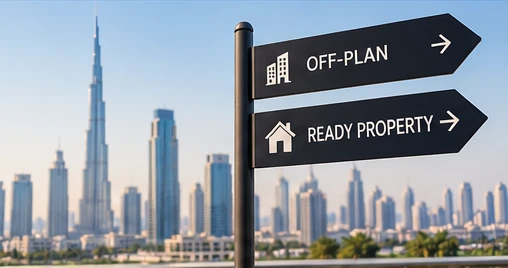
Off-Plan vs Ready Properties: Which Is Better for First-Time Buyers?
First-time buyers in Dubai frequently encounter two main property categories: off-plan developments and completed properties.
An off-plan property is purchased before construction is finished, whereas a ready property is already completed and can generally be inspected before purchase.
a. Buying off-plan property in Dubai
Off-plan developments may provide staged payment arrangements and opportunities to purchase units during the development phase. However, the final property cannot be inspected in its completed form when the buyer first commits to the purchase. Construction timelines, specifications, contractual terms, and developer performance therefore become especially important.
Before purchasing, buyers should verify the project registration, developer information, construction progress, and escrow-account details. Dubai Land Department provides a Real Estate Project Status Enquiry service that can help buyers check these details.
b. Why do escrow accounts matter?
Dubai's real estate regulations require escrow arrangements for registered off-plan developments. An escrow account is a designated account associated with a property development into which qualifying buyer payments are deposited under the regulatory framework.
The purpose is to support oversight of project funds and protect purchasers' interests. However, an escrow account does not eliminate every risk associated with off-plan property investment. Buyers should follow the prescribed payment instructions and verify the correct project escrow details before transferring money.
c. Buying a ready property in Dubai
Ready properties can be attractive to buyers who want to inspect the actual unit, understand the condition of the building, and move into a home without waiting for construction completion. They may also suit investors seeking a property that can be prepared for rental more immediately.
However, completed properties can still involve hidden defects, maintenance expenses, service-charge liabilities, or existing tenancy arrangements. A thorough inspection and document review remain important.
Off-plan vs ready property comparison
Neither category is universally better. The most appropriate choice depends on the buyer's finances, objectives, risk tolerance, and timeframe.
Dubai's First-Time Home Buyer Programme
First-time buyers who are residents of the UAE may also benefit from a dedicated initiative introduced by Dubai Land Department and the Dubai Department of Economy and Tourism on 2 July 2025. The First-Time Home Buyer Programme aims to make property ownership more accessible through partnerships with selected developers and financial institutions.
According to DLD, eligibility includes being at least 18 years old, being a UAE resident, not currently owning freehold residential property in Dubai, and seeking a property valued below AED 5 million.
Benefits may include early access to selected property launches, preferential developer pricing, financing arrangements with participating banks, and eligible registration-fee payment options. These benefits vary according to the participating institutions and the terms of each offer. Non-resident foreign purchasers should not assume that they qualify for this programme simply because they can legally buy Dubai property.
Eligible buyers can review the programme and registration process directly on the Dubai Land Department First-Time Home Buyer Programme page.
Common Mistakes First-Time Property Buyers Should Avoid
Even with an established registration system, purchasing property involves risks that buyers should carefully manage.
- Failing to calculate all purchasing expenses: Buyers may concentrate on the advertised price without accounting for registration, financing, brokerage, inspections, and subsequent maintenance costs. Request a complete transaction-cost estimate before signing an agreement.
- Buying without investigating the neighborhood: A property may look impressive in photographs but may not suit the buyer's daily requirements or investment goals. Assess transport connections, services, building management, neighboring developments, and local demand.
- Relying on unverified agents or developers: Before paying a reservation amount or sharing sensitive documentation, check the credentials of the relevant brokerage and other parties. For off-plan property, verify the registration and escrow details of the specific development.
- Ignoring contract conditions: Purchase agreements establish obligations that may be financially significant. Review payment dates, cancellation provisions, financing conditions, possession arrangements, and dispute-resolution procedures before signing.
- Assuming rental returns are guaranteed: Advertised rental yields are not the same as net investment returns. Investors should consider vacancy periods, maintenance costs, service charges, property management expenses, and financing costs. Future price appreciation and rental income cannot be guaranteed.
- Skipping property inspections: Before purchasing a completed unit, consider checking the air conditioning, plumbing, electrical fixtures, signs of water damage, structural concerns, and the general condition of the building. Where appropriate, obtain professional inspection and legal assistance.
How Can Mahel Real Estate Help First-Time Property Buyers?
Buying real estate in Dubai for the first time becomes more manageable when buyers understand their options and receive clear information about the purchasing process. At Mahel Real Estate, prospective buyers can begin exploring property opportunities and seeking assistance relevant to their requirements.
Whether you're purchasing your first home, considering an investment property, or researching available residential communities, begin by identifying your budget, preferred locations, and property requirements. Buyers should compare suitable properties, understand the complete transaction costs, and ensure that important documentation and ownership details are verified before proceeding.
Looking to buy your first property in Dubai? Contact Mahel Real Estate to enquire about your requirements and available assistance.
Frequently Asked Questions
1. Can foreigners buy property in Dubai?
Yes. Foreign nationals can purchase eligible freehold property in designated areas of Dubai. This includes qualifying non-resident purchasers. Ownership eligibility should be confirmed for the specific property before purchase.
2. Can I buy property in Dubai without a UAE residence visa?
Yes. Eligible overseas buyers can purchase property in designated freehold areas without first obtaining UAE residency. However, mortgage access and transaction documentation may differ for non-residents.
3. How much down payment do first-time property buyers need in Dubai?
The amount depends on financing eligibility and the purchase price. Under the UAE Central Bank's published limits, qualifying expatriate first-home borrowers may receive financing of up to 80% of a property's value when the value is AED 5 million or less. Individual banks may require a larger down payment.
4. What is the Dubai Land Department registration fee?
The standard DLD property sale registration service lists a combined 4% registration fee, consisting of 2% attributed to the buyer and 2% to the seller. Buyers should confirm the agreed allocation and additional charges before completing the purchase.
5. Is buying off-plan property in Dubai safe?
Dubai regulates off-plan property development through requirements covering project registration and escrow accounts. These safeguards are important, but they do not eliminate construction, contractual, financing, or market risks. Buyers should verify the developer, project status, and payment instructions.
6. What documents are required to buy property in Dubai?
Documents typically include valid identification, relevant sale documentation, and any required developer clearance. DLD's standard completed-property sale registration service specifies Emirates ID or a valid passport for non-resident foreign individuals, alongside an electronic developer NOC where applicable. Other documents depend on the transaction.
7. Can first-time buyers apply for a mortgage in Dubai?
Yes. Eligible buyers can seek financing from authorized lenders. Approval depends on the lender's requirements, the borrower's financial profile, the property, and applicable mortgage regulations. First-time buyers should request pre-approval before committing to a purchase.
8. Should I buy an apartment or villa in Dubai?
Apartments may suit buyers looking for managed buildings and convenient access to local amenities. Villas may appeal to households requiring additional space and privacy. The decision should consider the total ownership cost, lifestyle needs, and property condition rather than property type alone.
9. How long does it take to buy property in Dubai?
There is no universal purchasing timeline. A straightforward transaction may move more quickly than a financed or legally complex purchase. Mortgage arrangements, seller obligations, clearance requirements, registration, and handover conditions all affect the overall process.
10. Can buying property in Dubai help me obtain residency?
Certain property investments may support eligibility for UAE residence programmes when the applicable immigration requirements are satisfied. However, property ownership does not automatically guarantee a residence visa. Buyers should check current eligibility directly with the relevant UAE immigration authorities.
11. Is Dubai a good place for first-time real estate investment?
Dubai provides opportunities to purchase property in different communities and development categories. However, investment suitability depends on acquisition costs, location, property condition, financing expenses, potential rental demand, and market conditions. Buyers should evaluate realistic net returns and associated risks.
12. Why should I use a real estate agent when buying property in Dubai?
A qualified agent may help buyers identify suitable properties, arrange viewings, compare options, communicate with sellers, and coordinate transaction requirements. Buyers should verify the broker's credentials and agree to the relevant fees before proceeding.
Related Posts

How to Choose the Right Real Estate Agency in Dubai
Choosing the right real estate agency in Dubai is essential for a smooth property transaction. Discover how to verify RERA licensing, evaluate agency experience, compare brokerage fees, review customer feedback, and select a trusted property consultant for your buying, selling, or investment needs.

Christian A. Rockefeller Business Tower Dubai: Inside Sheikh Zayed Road’s New Landmark Commercial Tower
Discover the Christian A. Rockefeller Business Tower by LMD on Sheikh Zayed Road, Dubai. The 87-story commercial landmark features 332 Grade A freehold offices, premium business and wellness amenities, a 50/50 payment plan, and an expected Q2 2031 handover.

Dubai Real Estate 2026: Best Areas to Invest for High ROI & Rental Yield
Discover the best places to invest in Dubai real estate in 2026. Compare high ROI communities, rental yields, market trends, ready properties and off-plan investment opportunities with Mahel Real Estate.